
National Office
Please enter the office location/term above to receive results for your closest office as well as information matches
National Office
Please enter the office location/term above to receive results for your closest office as well as information matches
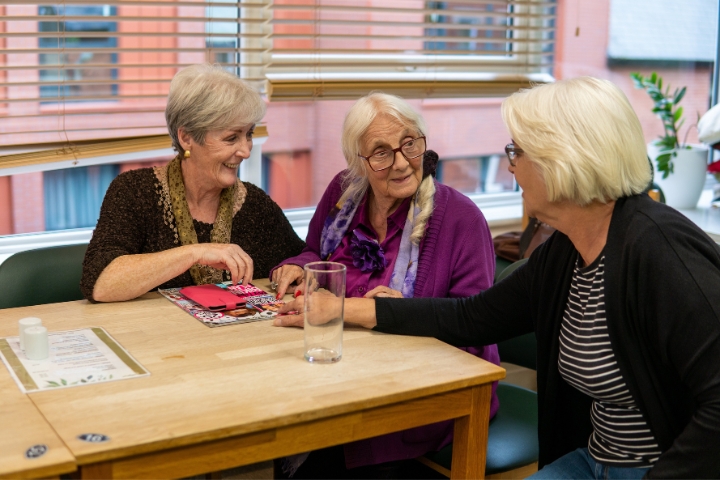
There’s an assumption in social and medical care across the UK that the default family structure is a so-called traditional nuclear family, based on the typical mum, dad and 2.4 children. The reality is actually quite different.
A big demographic shift is taking place, with many older adults no longer relying on a traditional family set up. More and more people have non-traditional networks to provide love, support and care in older life. For instance, the fastest growing demographic in the UK is people without children. According to the Office for National Statistics, over 1.2 million people aged 65 and over currently do not have adult children, a figure projected to rise to two million by 2030.
And there are other people, like the LGBT+ community, whose older members often rely heavily on ‘chosen families’ due to historical rejection or lack of biological heirs. Couple that with individuals who have had to deliberately cut ties with biological relatives for their own well-being, and the result is a large proportion of the UK population who don’t fit the mould of the traditional family.
The reality of this demographic shift is that, if these people don’t put legal protections in place, they may find that the state, the NHS, and other care systems will default to their biological next-of-kin, even if they are estranged.
Stefanka Martin, Associate Lawyer at Shrewsbury-based solicitors, Wace Morgan, outlines the problem:
“In the UK, the phrase “next of kin” is a common social term, but under UK laws, it doesn’t actually have any official legal status or decision-making power for adults who lose mental capacity.” She adds: “Most people assume that if they get sick or injured, their chosen family, whether that’s a partner, close friends, or trusted allies, can automatically manage their bank accounts or make decisions about their medical care. The truth is, they can’t.”
So what can people with a chosen family or non-traditional support network do? And how can they ensure their wishes are respected, and the key people they want to make the decisions, are able to?
There are four key legal protections that can be put in place ahead of any decisions that need to be made, and will ensure that the person’s wishes are respected and carried out.
The first of these is the snappily named: Health and Welfare Lasting Power of Attorney or LPA. Put simply, this is a legal document that lets you appoint one or more trusted people – your attorneys – to make decisions about your personal care and medical treatment, if you ever lose the mental capacity to make those decisions yourself.
Alongside this, there’s its counterpart: the Property and Financial Affairs Lasting Power of Attorney. This is a similar legal document that allows trusted people, chosen by you, to handle your money, bank accounts, property and financial commitments. Unlike the Health and Welfare LPA, the Property and Financial Affairs LPA allows you to use your attorneys to help you while you still have mental capacity. As Stefanka Martin explains: “This is incredibly useful if you’re physically frail or not able to leave your house easily – or if you simply want help dealing with banks, utility companies, or tax authorities, as communicating with them can be very frustrating.”
The third document to have in your armoury, is an Advance Decision to Refuse Treatment (ADRT). This is also known colloquially as a Living Will. The Advance Decision is a legally binding document that specifies what medical treatments you do not want to receive, which protects your friends or support network from having your choices questioned by estranged relatives or doctors.
For example, if you’ve prepared an ADRT (which complies with Mental Capacity Act 2005) that refuses CPR or being put on a ventilator in specific circumstances, such as advanced Alzheimer’s, then doctors are legally bound to comply with your wishes – they cannot force mechanical ventilation on you, even if doing so might extend your life.
Lastly, accompanying your will with a Letter of Wishes will enable you to explain why your estate assets and accompanying responsibilities are going to non-relatives. This will help to mitigate the risk of biological families contesting your will.
None of this is particularly easy or pleasant to think about. However, here at Radfield Home Care Shrewsbury & Oswestry, we see situations where having these things in place is vital and actually calms a crisis situation down, because the person’s wishes are known in advance. As Gemma Baugh, our Registered Care Manager says:
“We want everyone to age well, and that means supporting people to define, develop and live their own identities as well as working with their own chosen families – whatever that looks like!”
As people age and start to think about these issues, it’s important to put things in place earlier, rather than later. When you know what you want and who you want involved, spend a little time informing people like your GP, social workers and, if appropriate, your local authority of your non-traditional network. As Gemma says: “By acting early, you’ll save yourself a headache later on – and remove the chance for wrangling or arguments when emotions are already running high.” She also advises those dealing with medical and social care systems to use legal terminology when navigating care. Saying: “She is my Health and Welfare Attorney under a registered LPA” carries far more weight in a hospital than saying: “She is my best friend.”
As more and more people across Shropshire and the UK are ageing in non-traditional family settings, empowering their chosen families means honouring the people who have been an important thread running throughout their lives. And rather than seeing later-life planning as a depressing chore, it can actually be a liberating act of love and boundary-setting.
A final thought from Stefanka Martin, who says: “Don’t wait for a crisis. The UK Mental Capacity Act 2005 only allows you to set up these protections while you still have the capacity to do so. It’s better to get it done sooner, rather than later.”
If you’d like further information or have questions then there are several specialised UK advocacy and support groups. In Shropshire, there’s the EMBRACE network for LGBT+ elders, and nationally there’s Ageing Without Children (AWOC), and Stand Alone for family estrangement support.

Richard combines senior leadership experience with hands-on care expertise to ensure our clients and their families feel valued and connected to their local community.
Read moreGet in touch with your local Radfield Home Care office today and find out more about the support we offer and the difference we can make.