
National Office
Please enter the office location/term above to receive results for your closest office as well as information matches
National Office
Please enter the office location/term above to receive results for your closest office as well as information matches
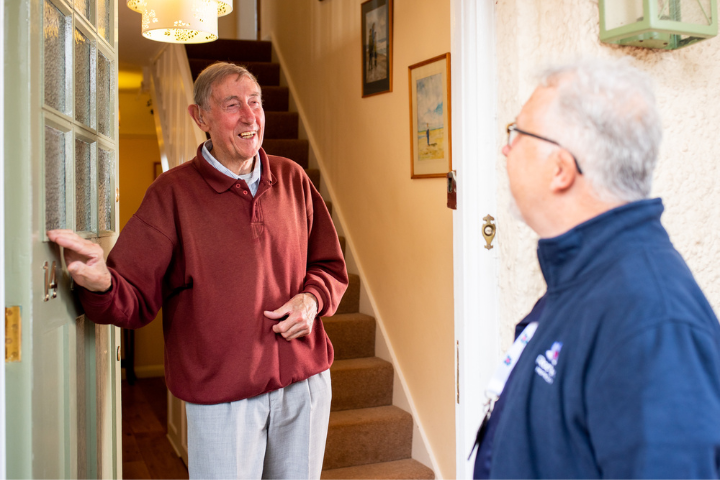
I have been thinking about how much of our social life happens without us ever putting it in the diary. You go for a paper and end up talking to someone outside the shop. You return a library book and spend longer catching up than you did choosing the next one.
Then the afternoons get darker, the pavements are wet, and you decide the paper can wait until tomorrow. A friend who usually calls in leaves it for another day because they would rather not drive home in the dark.
You do not think much of it at the time. Then you get to Friday and realise you have not seen anyone since Monday.
I quite like a quiet afternoon myself. Having the time to read or get on with something at home can be a pleasure. I think the real difference is whether you are spending the afternoon that way by choice.
Across the country this gradual shrinking of daily routines is surprisingly widespread. Research published by Age UK and the Campaign to End Loneliness reveals that more than 1.4 million older people experience chronic loneliness. Even more striking is that over 500,000 older adults go five or six days every week without speaking to or seeing a single friend, neighbour, or family member.
Loneliness in older adults rarely happens all at once. It happens incrementally: an icy path here, a cancelled bus service there, or a friend moving away. Tackling loneliness in older adults begins with noticing those first quiet weeks before they turn into months of solitude.

If I was wondering how someone was getting on, I might ask what they have missed doing lately. You often get a far more useful answer than you would get from asking directly whether they are lonely.
Most people will instinctively answer “I’m fine” because they do not want to appear a burden or admit to feeling vulnerable. But if you ask what they have missed doing, they might tell you they have stopped going to the Thursday coffee morning because the walk home feels a bit much now. Once you know that, you can ask if they’d like a lift.
And if you’re going to the village hall yourself, saying “I’m going on Thursday. Would you like me to pick you up?” is a much easier offer to take up than “let me know if you need anything.” I’ve said the second one myself, with every intention of helping. It still leaves the other person having to ask, which is often the hardest hurdle to overcome.
Taking the initiative yourself is often the simplest way to help an isolated older person, taking the pressure off them entirely and replacing an awkward ask with a friendly plan.

In my last article, I wrote about how much a good Care Professional notices. If someone usually tells you what they had for lunch with a friend and then doesn’t mention it for a couple of weeks, you might ask how the friend’s getting on. It might turn out they haven’t seen each other because getting out has become harder.
Sometimes we can help someone get ready and go with them. Other times they’d rather have a friend round, and a hand making lunch is all they need. It might be as simple as helping them find a number and make a call they’ve been meaning to make for weeks.
Companionship care for older adults in York is designed around these personal details. Rather than focusing on clinical tasks, our support is about companionship, conversation, and shared activities. Introducing companionship care for older adults early provides a gentle presence in the home, ensuring there is always a friendly conversation to look forward to during the week.
I’d like us to get into the habit of asking what someone is looking forward to when we talk about care. The answer can tell us quite a lot about what would help.
And if someone has come to mind while you’ve been reading this, give them a ring. You could start by asking what they’re doing on Thursday.
If you’d like to talk about visiting care or companionship for yourself or someone in your family, call us on 01904 530 118.

Marco’s goal is to inspire and empower the team to deliver outstanding support to clients and the wider community.
Read moreGet in touch with your local Radfield Home Care office today and find out more about the support we offer and the difference we can make.