
National Office
Please enter the office location/term above to receive results for your closest office as well as information matches
National Office
Please enter the office location/term above to receive results for your closest office as well as information matches
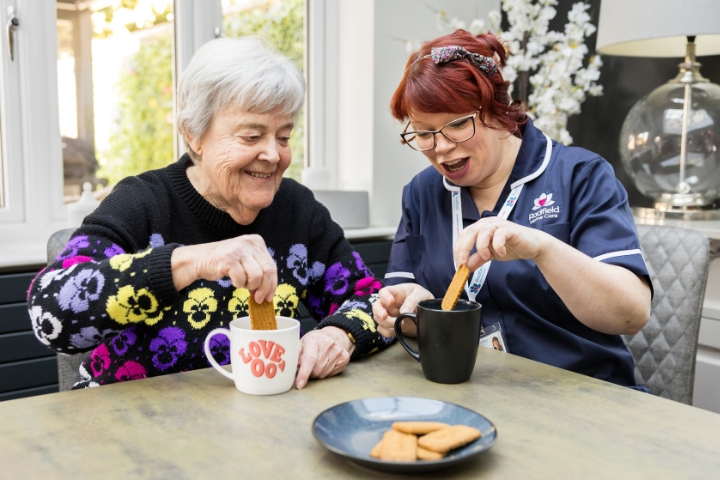
Mealtimes are about much more than just nutrition. They are a cornerstone of our social lives and a source of daily pleasure. However, for a person living with dementia, the dining room can quickly become a place of confusion and frustration. Changes in visual perception and sensory processing can make a once-simple task feel overwhelming.
At Radfield Home Care, we believe that with a few thoughtful adjustments, dementia friendly dining can ensure that mealtimes remain a dignified and joyful experience. By understanding the “why” behind these daily dining challenges, we can create an environment that encourages genuine independence and connection.
Dementia often affects how the brain processes visual information, particularly the ability to distinguish between similar colours. If a white plate is placed on a white tablecloth alongside mashed potatoes and cauliflower, a person living with the condition may literally be unable to see the food. This “visual camouflage” often leads to a loss of appetite simply because the meal is invisible to them.
To support independent eating, research highly recommends using high-contrast colours. Placing a bright red or blue plate against a light-coloured table makes the boundaries of the dish entirely clear.
Similarly, ensuring that a glass of water is easily visible by using a coloured coaster or a tinted glass can significantly improve fluid intake. These simple visual cues act as a clear roadmap, guiding a person through their meal safely without the need for constant verbal prompts.
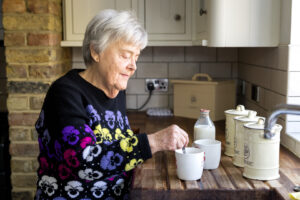
The surrounding atmosphere can often be too “busy” for someone facing cognitive challenges. Background noise, such as a loud television, clattering pots, or multiple simultaneous conversations, can make it almost impossible to focus on the task of eating. This sensory overload frequently leads to an individual leaving the table early or becoming deeply distressed.
Creating a calm, quiet, dementia friendly dining environment is essential for peace of mind. Try to implement these simple steps:

Dehydration is a significant risk when dining with dementia, as the “thirst mechanism” in the brain often weakens over time. Relying on an individual to explicitly ask for a drink is frequently not enough to keep them safe. Instead, we highly suggest making hydration a natural, routine part of the rhythm of the day.
You can discover more practical hydration tips in our dedicated article to supporting older adults with fluids.
Creating a supportive environment goes far beyond the dining table. If you are currently looking for more practical ways to support your elderly parents, our comprehensive guide offers expert advice on adapting the entire living space.
Read our full guide on “Living with Dementia: Creating a dementia friendly home“ to explore further strategies for helping your loved ones age well at home.

Luke brings 20+ years’ healthcare experience, ensuring safe, high-quality, dignified care at Radfield.
Read moreGet in touch with your local Radfield Home Care office today and find out more about the support we offer and the difference we can make.