
National Office
Please enter the office location/term above to receive results for your closest office as well as information matches
National Office
Please enter the office location/term above to receive results for your closest office as well as information matches
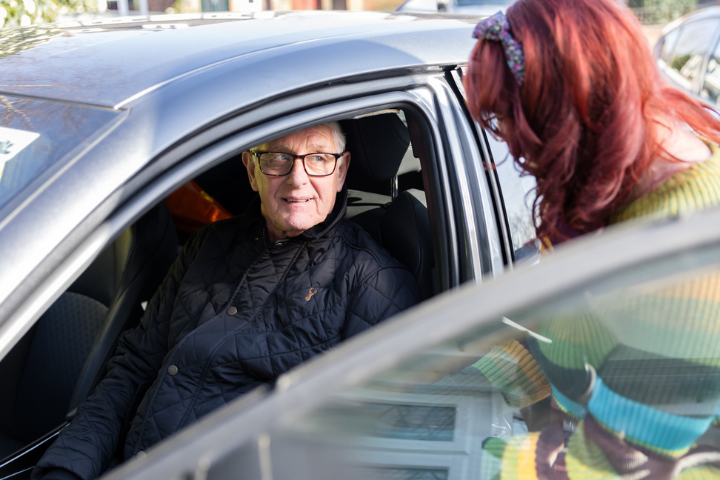
Reaching the age of 70 is a milestone worth celebrating, but it also marks a point where the Driver and Vehicle Licensing Agency (DVLA) requires motorists to review their eligibility to drive.
In the UK, a driving licence automatically expires when a person turns 70, meaning older motorists must actively engage with the renewal process to stay legal on the road. As a family member, understanding the new UK driving rules for over 70s is vital to helping your older relatives navigate these requirements while staying safe and confident.
Under the established framework overseen by the DVLA, drivers aged 70 and over do not face a blanket ban or a mandatory retest, but they must transition to a mandatory three-year renewal cycle. (Age UK, 2026).
A key focus of the new UK driving rules for over 70s is stricter health and eyesight accountability. Drivers are legally obligated to make an enhanced medical declaration, and the Department for Transport has actively consulted on tightening these checks, including potential mandatory eyesight testing, to move away from simple self-declaration.
This ensures that age-related changes in vision or physical health are properly reviewed before a licence is reissued.
Navigating the official DVLA process is straightforward if you plan ahead. Here is how you can help your loved ones prepare for their 2026 driving assessment for over 70s and application:
Track the DVLA notice: The DVLA should automatically send a D46P application form to the driver’s registered address roughly 90 days before their 70th birthday, and every three years thereafter.
Complete the health declarations: Review the form together. If your relative has a “notifiable” medical condition (such as glaucoma, diabetes, or a neurological condition), this must be declared. The DVLA may then require a formal 2026 driving assessment for over 70s or a medical report from a GP before renewing the licence.
Submit free of charge: Renewing a licence at 70 or older is entirely free. It can be completed quickly via the official GOV.UK website or by returning the D1/D46P paper forms by post.
To keep older people moving safely without completely revoking their independence, the DVLA can issue restrictive or short-term medical licences. If an applicant’s fitness to drive requires regular monitoring, the DVLA may grant a licence valid for just one or two years rather than the standard three.
Furthermore, based on medical recommendations, conditional licences can restrict driving to specific parameters, such as “daylight-only” driving for those with poor night vision, or specific vehicle category restrictions.
Broaching the topic of driving retirement is deeply emotional. For many older adults, a car represents their ultimate freedom. When starting this conversation, choose a quiet, relaxed moment at home.
Avoid dictating terms or making demands. Instead, focus on your love for them and your genuine concern for their safety. Frame the transition not as a loss of freedom, but as a positive new chapter where their safety and comfort take priority. Listen to their fears, validate their feelings, and assure them that they will not be left isolated.
Retiring from the driving seat does not mean losing touch with the local community. Radfield Care Professionals are here to bridge the gap and ensure a smooth transition.
Our tailored home care services include dedicated transport and accompaniment. Whether it is a weekly shopping trip, a medical appointment, or a social visit to see friends and family, our Care Professionals ensure your loved ones remain connected, active, and independent without ever needing to get behind the wheel.

Charlie is a motivated, practical and caring individual with a vast background in the care sector. He ensures high service quality.
Read moreGet in touch with your local Radfield Home Care office today and find out more about the support we offer and the difference we can make.