
National Office
Please enter the office location/term above to receive results for your closest office as well as information matches
National Office
Please enter the office location/term above to receive results for your closest office as well as information matches
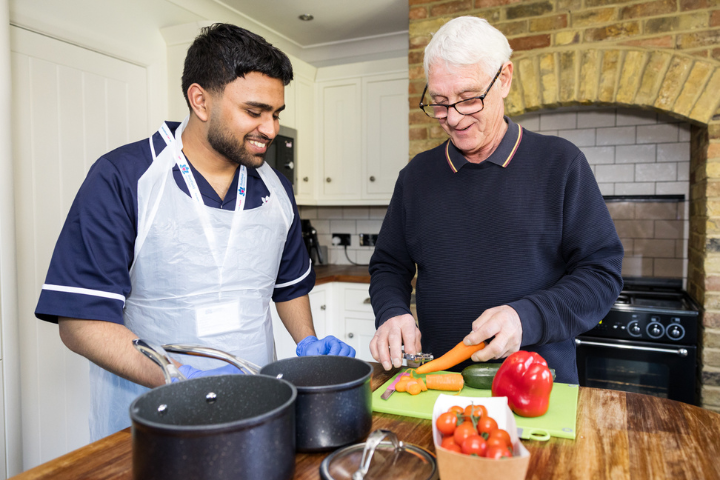
Food is the body’s internal fuel, and eating well provides the warmth, energy, and physical resilience needed to get through the winter months safely.
Yet as the temperature drops, appetite and energy levels often dip as well. For anyone supporting an ageing parent, understanding how seasonal changes affect the body is the first step in planning a balanced diet for older people. Understanding winter nutritional needs for older people helps to protect physical strength, maintains muscle stability, and defends against cold-weather illnesses of your loved ones.
This guide explores practical ways to spot the subtle warning signs of weight loss and build simple, warming meal routines that keep older adults thriving at home throughout the winter.
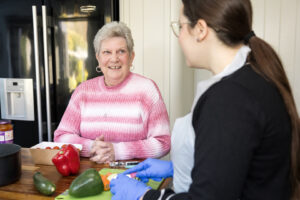
Cold weather places unique metabolic demands on the body. As people age, our skin gets thinner and circulation slows, meaning the body must work harder to preserve its core temperature.
Maintaining body heat burns calories. If an older person skips meals, eats cold snacks, or consumes too few calories, their body cannot generate sufficient heat through digestion. This increases their susceptibility to hypothermia, slows reaction times, and leaves muscles stiff and prone to injury.
Equally important is protein intake. Clinical guidelines from the British Dietetic Association (BDA) state that older adults require between 1.0 and 1.2 grams of protein per kilogram of body weight each day. This is higher than the recommended intake for younger adults, as higher protein levels are needed to counteract age-related muscle loss (sarcopenia) and support diet-induced thermogenesis: the biological heat generated when the body digests food.
Adapting the nutritional needs for old age & older people during the winter ensures the body has the fuel it needs to stay warm, maintain physical balance, and preserve daily mobility.
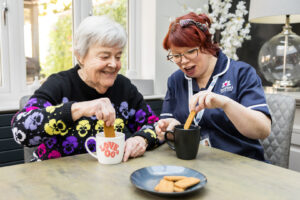
Winter weight loss often happens quietly. When an older relative is wrapped in thick cardigans, dressing gowns, and blankets, gradual physical changes can easily go unnoticed until a serious health event occurs.
Research from the British Association for Parenteral and Enteral Nutrition (BAPEN) reveals that more than 1.3 million people aged 65 and over in the UK suffer from or are at risk of malnutrition. Remarkably, 93% of these individuals live independently in the community rather than in hospitals or care homes. Understanding the signs of malnutrition in older people is essential for family carers.
When visiting an older relative this winter, look for these indicators:
Understanding the winter nutritional needs of older people and spotting these signs early allows families to adjust meal routines before poor nutrition deteriorates your loved ones health.

When appetite is small, presenting an older adult with a large, overflowing plate of food can feel overwhelming and lead to meal refusal. Improving a diet for older people during the colder months relies on small, nutrient-dense portions packed with energy.
To support winter nutritional needs for older adults effectively, consider these practical adjustments:
Instead of serving larger meals, fortify smaller portions to maximise calorie and nutrient density without increasing plate volume. Stir grated cheese, butter, or double cream into mashed potatoes; make morning porridge with full-fat milk rather than water, adding a spoon of honey or ground almonds; and blend skimmed milk powder into warm soups and sauces to boost protein.
National recommendations from the Scientific Advisory Committee on Nutrition (SACN) advise that everyone in the UK should take a daily supplement of 10 micrograms (400 IU) of Vitamin D between October and March. In the winter, sunlight is insufficient for the skin to synthesize Vitamin D naturally, making dietary sources such as oily fish, eggs, and fortified spreads essential for bone density and immune function.
Pairing this with Vitamin C from citrus fruits and stewed berries helps support immune defences against winter colds.
Arthritic hands, standing fatigue, and low motivation make preparing meals from scratch feel like a chore. Using slow cookers (or air fryers!), buying pre-chopped root vegetables, and batch-cooking stews and casseroles in individual portion pots ensures a warm, homemade dinner is always ready to reheat with minimal effort.
Meeting the winter nutritional needs for old age does not require complicated cookery. Focusing on warmth, flavour, and high-energy ingredients keeps older adults well-fed in winter without causing cooking stress.
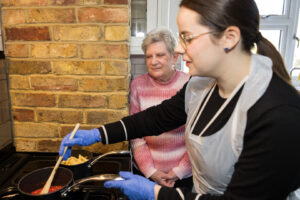
While families naturally focus on hot food, fluid intake is frequently forgotten in winter. Yet dehydration is one of the most common causes of preventable hospital admissions among older adults between November and February.
As we age, the brain’s thirst receptors become blunted. Older people rarely feel thirsty, even when their body is severely dehydrated. In winter, this issue is made worse because many older adults deliberately limit their drinking, fearing cold trips to the bathroom or nighttime incontinence.
Understanding how to prevent winter dehydration in older adults is vital. When an older person is dehydrated, their blood volume drops, leading to a sudden drop in blood pressure when standing, which can trigger dizziness and domestic falls. Furthermore, low fluid intake concentrates urine, drastically increasing the risk of urinary tract infections (UTIs) that lead to sudden confusion and delirium.
To manage fluids effectively and learn how to prevent winter dehydration in older adults:
Learning how to prevent winter dehydration in older adults protects cognitive clarity and keeps balance steady throughout the winter season.
Preparing fresh meals, carrying heavy grocery shopping, and drinking sufficient fluids can be difficult to manage alone. For families living outside Hampshire or juggling workplace commitments, ensuring an older parent is eating well every day can cause immense anxiety.
This is where Radfield Home Care Fareham, Gosport & Warsash can step in. Our local Care Professionals provide flexible, dignified mealtime and welfare support designed to meet the winter nutritional needs of older people:
By providing attentive, unhurried support, our team ensures the signs of malnutrition in older people are addressed before they impact wellbeing, giving your family complete reassurance all winter long.
If you are concerned about an older relative’s diet, weight, or hydration this winter, contact our team on 01329 739 073 today!

Debbie is responsible for the day to day running of the office in line with CQC regulations and also for ensuring that the service is safe, caring, responsive, effective and well led.
Read moreGet in touch with your local Radfield Home Care office today and find out more about the support we offer and the difference we can make.