
National Office
Please enter the office location/term above to receive results for your closest office as well as information matches
National Office
Please enter the office location/term above to receive results for your closest office as well as information matches
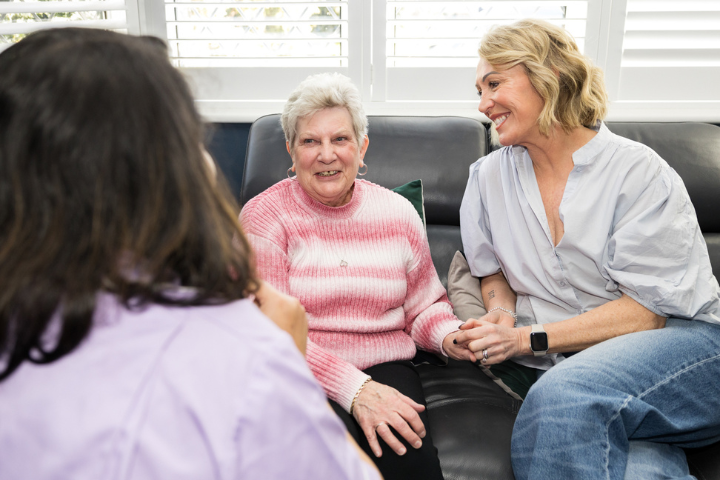
Are you caring for someone living with dementia in Epsom, Leatherhead, East Horsley or Tadworth?
Do you notice changes in their behaviour late afternoon or in the evening?
If so, they may be experiencing sundowning.
This is a term often used in care, but many families tell us they don’t fully understand what it is or how to manage it.
At Radfield Home Care Epsom & Leatherhead, we support many families throughout Epsom, Ewell, Ashtead, Leatherhead, Bookham, Fetcham, Tadworth, Walton on the Hill and the surrounding communities with this daily transition. Here is a clear, practical guide to help you understand what’s happening and what you can do at home.
Sundowning describes the physiological changes a person with dementia can experience as daylight fades. It’s not intentional behaviour — it is the result of changes in the brain, sleep patterns, and the body’s internal circadian rhythm (our biological clock).
As we get older, our sleep naturally changes. It is considered normal for older adults to wake two or three times a night for 10–20 minutes. This on its own is not harmful.
However, sleep is also the time when the brain:
This “waste” includes excess proteins produced during the day, proteins that are strongly linked to dementia. During deep sleep, the brain washes these away. When someone has inadequate or fragmented sleep, this process is interrupted, contributing to further neurodegeneration.
Put simply: sleep is essential for brain health, and when dementia disrupts sleep, symptoms such as sundowning become more pronounced.
Sleep and melatonin play a major role in setting our body clock, which influences:
Daylight is one of the most powerful signals that keeps the body clock aligned.
But as we age, our eyes naturally take in less light.
And for people with significant sight loss, the brain receives even fewer daylight signals, making it harder for the body clock to distinguish day from night.
In dementia, the part of the brain responsible for regulating the body clock becomes further disrupted — making the late afternoon and evening a particularly vulnerable time.
Sundowning varies from person to person, but common signs include:
These symptoms can be made worse by:
The aim is to create a calm, predictable daily rhythm while avoiding overstimulation. Structure and familiarity make a significant difference.
If teeth brushing, medication, or personal care regularly cause distress, complete these tasks before the usual sundowning time.
It’s about what’s calm and achievable — not what “should” happen at specific points in the day.
A peaceful medication routine at 4 pm is far better than a distressed one at 8 pm.
Try going for a short walk together, even to the end of the driveway and back, to give the comforting sense of “returning home”.
Caring for someone with dementia is deeply rewarding but also exhausting.
Tiredness affects patience, communication and our ability to stay calm, especially during sundowning episodes.
If you are caring full-time, respite is essential, not optional.
Options could include:
You cannot pour from an empty cup, and your well being directly affects your loved ones.
If sundowning is becoming more frequent or distressing, you don’t have to manage it alone. Our Care Professionals at Radfield Home Care Epsom & Leatherhead are trained to support families through these transitions with calm, personalised approaches that help reduce anxiety and restore routine.
We support individuals and families across Epsom, Ewell, Epsom Downs, Ashtead, Leatherhead, Fetcham, Bookham, East Horsley, Tadworth, Banstead and the surrounding areas.
If you’d like to talk through the challenges you or a family member are living with, our local team is here to help.

Karen’s natural affinity for care and nurturing relationships makes her perfect for the home care sector, where she can help the local community age well and remain connected to what matters most.
Read moreGet in touch with your local Radfield Home Care office today and find out more about the support we offer and the difference we can make.