
National Office
Please enter the office location/term above to receive results for your closest office as well as information matches
National Office
Please enter the office location/term above to receive results for your closest office as well as information matches

Deciding to introduce support into a loved one’s home is a decision often met with resistance. We frequently hear from families that their loved one is perfectly capable of managing their physical tasks, yet they are experiencing a growing sense of isolation or loneliness.
For many, the idea of “care” feels heavy, medical, or intrusive. But what if the support your loved one only wants companionship? Some company, conversation, and a bit of reassurance?
At Radfield Home Care, we know that companionship is often the missing piece in the puzzle of ageing well. It focuses entirely on emotional wellbeing, routine, and human connection, offering a solution that doesn’t feel like “care” in the traditional, clinical sense. It is a way to stay connected to life without losing any sense of agency or independence.

Companionship care is rooted in the philosophy that social health is just as vital as physical health. While traditional care services are often task-led, companionship is relationship-led. Our Care Professionals don’t come into a home to “do for” a person; they come to “be with” them.
In practice, this looks different for every individual. It might involve:

Bringing up the topic of support can be delicate. Often, the resistance to care stems from a fear that it implies a loss of independence. To introduce companionship care in a way that feels natural, focus on the benefits to their lifestyle rather than their limitations.
Instead of saying, “You need someone to help you,” try framing it around what they love:
By positioning the Care Professional as a companion, you remove the stigma of “needing help” and replace it with the addition of a new, friendly presence.

The impact of regular companionship on a person’s quality of life is profound. Loneliness is a significant barrier to ageing well, affecting both physical and mental health. By introducing companionship support, you are actively investing in your loved one’s long-term wellbeing.
The term “care” is loaded with connotations of illness, frailty, and a transition into a new, dependent chapter of life. For someone who has lived a long, autonomous life, “care” can sound like a loss of identity.
Companionship care bypasses these anxieties because it isn’t medical. It sits comfortably alongside the existing lifestyle of your loved one. It doesn’t disrupt their sense of self. Because the focus is on interests and shared experiences, the Care Professional is viewed as an addition to their world, not a supervisor.
This makes it a much more acceptable solution for those who are proud of their independence and want to preserve it for as long as possible.
One of the greatest advantages of choosing companionship care is that it creates a natural, trust-based foundation for the future. As needs change, a Care Professional who is already a trusted fixture in the home is perfectly positioned to step in with more intensive support.
If your loved one’s needs evolve, there is no jarring “transition” to a new service or a new company. The relationship is already established. Whether it’s help with medication, mobility, or personal care, the introduction of these tasks feels like a natural extension of an existing friendship.
This continuity ensures that your loved one never has to feel like they are being “handed over” to someone else; they are simply receiving more support from someone they already know and trust.
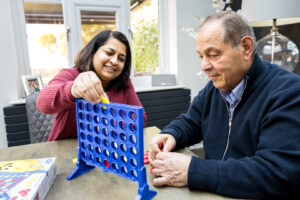
Companionship care supports everyday life without taking over. It allows your loved one to remain independent, connected, and in control, while creating a natural pathway to further support if and when it becomes right.
It is about enriching life, not managing it. So if your loved one only wants companionship, help them find the right Care Professional to support them in remaining connected to the things they love.
Is it time to start a conversation about companionship?

A qualified GP, Dr Hannah MacKechnie founded Radfield Home Care with her brother to help people age well.
Read moreGet in touch with your local Radfield Home Care office today and find out more about the support we offer and the difference we can make.