
National Office
Please enter the office location/term above to receive results for your closest office as well as information matches
National Office
Please enter the office location/term above to receive results for your closest office as well as information matches
At a recent community event in Hillingdon, I had several conversations with families that stayed with me.
Different families, different circumstances, but a remarkably similar concern: how do we introduce a little support to someone we love when they feel they’re managing perfectly well on their own?
What struck me was how many families were navigating the same dilemma: how do you offer support without making someone feel they are losing their independence?
For someone who has spent decades looking after themselves and others, accepting help can feel like admitting defeat. But often, resistance to care isn’t about the help itself. It’s about the fear of losing control, privacy or familiar routines.
According to research published by Age UK, nearly two million older people in England live with unmet care needs, yet over 90% express a deep determination to remain independent in their own homes. Resistance rarely stems from a rejection of support itself; it is driven by a natural fear of losing privacy, control, and established routines. Learning how to talk to older parents about care begins with reshaping that conversation around dignity rather than decline.
So how can families approach this differently?

Rather than focusing on what a loved one can no longer manage, talk about what would make life easier or more enjoyable.
Direct statements like “You can’t manage the weekly food shop anymore” immediately put people on the defensive. Instead, try a gentler approach: “Wouldn’t it be nice to have someone give you a hand with carrying the heavy shopping bags, so you have more energy to enjoy your garden this afternoon? ”
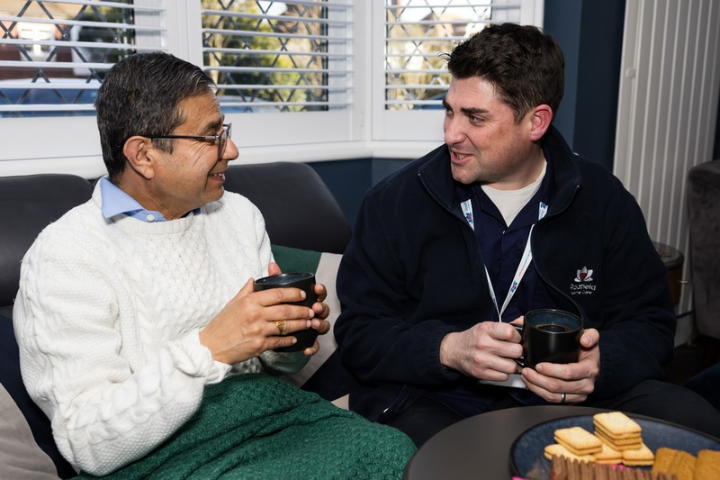
Choose a relaxed, unhurried moment to talk, perhaps over a cup of tea. Avoid bringing up care during stressful episodes, such as immediately after a fall or an argument. Listen carefully to their worries, validate their perspective, and avoid pushing for an immediate decision. The most successful care arrangements develop through steady, patient conversations.
True independence is not about doing every household chore without assistance; it is about retaining the freedom to make your own life choices.
When an older parent refuses help at home, resistance often softens the moment they realise they remain in the driver’s seat. Involve your relative in every stage of planning:
The more involved someone feels in choosing their care routine, the less it feels like an imposition forced upon them by well-meaning relatives.

Many older adults assume that home care automatically means personal care, such as assistance with washing, showering, or getting dressed. This assumption can make the idea of having a carer in the house feel intrusive.
However, introducing home care gradually allows trust to build naturally. Care can start with low-pressure companionship visits once or twice a week:
Seeing the same friendly face on a regular schedule helps establish genuine rapport. Over time, having a familiar Care Professional visit feels less like receiving clinical care and more like catching up with a trusted family friend.

Across Hillingdon, Ruislip, and Uxbridge, thousands of adult children and spouses are quietly juggling caring duties alongside full-time jobs, children, and their own health. Caring for someone you love is an act of devotion, but without a break, it can take a severe physical and mental toll.
National research from Carers UK reveals that 74% of unpaid carers experience stress or anxiety, while 42% report that their physical health has deteriorated as a direct result of caregiving. Recognising the early warning signs of carer burnout and respite support options is essential for sustaining long-term family care.
Accepting external help is not a sign that you are giving up on your relative. Taking advantage of carer burnout and respite support gives you the time to rest, attend to your own wellbeing, and return to your caring role refreshed. Ultimately, having reliable home care support in Hillingdon and Uxbridge means you can step away from being an exhausted task manager and return to being a loving son, daughter, or partner.
At Radfield Home Care Northwood, Ruislip & Uxbridge, our philosophy is simple: good care should protect independence, never diminish it. We take the time to learn each client’s unique routines, personal history, and preferences, matching them with dedicated Care Professionals who share similar interests.
If you are currently researching how to talk to older parents about care, remember that you do not need to have all the logistical details figured out before speaking to us. Whether you are dealing with an older parent refusing help at home, seeking guidance on introducing home care gradually, or exploring carer burnout and respite support for yourself, an informal chat is the best place to begin.
Together, we can explore what practical support will make life easier for your relative while helping them continue living safely on their own terms.
If you would like a friendly, no obligation discussion about arranging care in Northwood, Ruislip, Uxbridge, or surrounding Hillingdon communities, our local team is here to help:
If you’re exploring care options or finding it difficult to start the conversation, these Radfield Home Care guides offer additional practical advice:

Mugdha combines global strategic expertise with a passion for delivering dignified, professional, and compassionate home care.
Read moreGet in touch with your local Radfield Home Care office today and find out more about the support we offer and the difference we can make.