
National Office
Please enter the office location/term above to receive results for your closest office as well as information matches
National Office
Please enter the office location/term above to receive results for your closest office as well as information matches
For many people, the word care suggests a sudden emergency or a significant loss of personal freedom. This companionship care guide is written to challenge that view. It is designed specifically for older people and proactive families who see support as a practical way to preserve independence rather than a desperate response to a medical crisis.
At Radfield Home Care, we believe that choosing support early is an act of foresight that allows you to maintain control over your lifestyle.

Companionship care is a specific form of support that focuses on social interaction, emotional well-being, and practical assistance with daily tasks. It is an option that adapts to your life rather than forcing you to adapt to a clinical routine.
By exploring how this type of service works, you can move away from the anxiety of the unknown and focus instead on the positive opportunities for continued growth and community involvement. Our focus is always on enabling individuals to live well on their own terms.
This provides the stable foundation necessary for staying at home for longer, ensuring that safety and comfort are maintained without sacrificing personal dignity or choice.
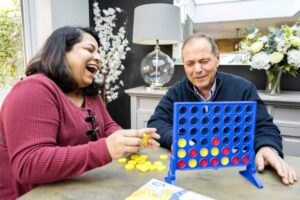
Companionship care is primarily a social and practical support service. It is designed for older individuals who are physically independent but would benefit from conversation, emotional reassurance, routine structure, and light assistance around the home. A companionship Care Professional might help with:
Personal care involves hands-on physical assistance with intimate daily tasks. It is required when an individual has mobility limitations, physical frailty, or cognitive decline that impacts their ability to self-care. Personal care includes everything within companionship care, plus support with washing, dressing, grooming, continence care, and physical transfers (such as getting in and out of bed or a wheelchair).
Choosing companionship care as an early intervention is often the most effective way to prevent the rapid physical and emotional decline that leads to complex personal care needs.
By introducing a trusted companion early, you establish a familiar routine. Should your parent’s health evolve to require hands-on personal care or full-time live in care, that seamless transition happens with a familiar team they already know and trust.

One of the main benefits of companionship care is preventing larger difficulties later on.
For instance, managing a large weekly shop or keeping on top of laundry can become physically exhausting over time. When these tasks are shared with a dedicated Care Professional, the burden is removed, leaving you with more energy to enjoy your day.
This support is discreet in its delivery but substantial in its impact, allowing you to remain the author of your own life within your familiar environment. It is also important to note that companionship care for older people is entirely flexible. It does not impose a rigid schedule on your household. Instead, it is built around your preferences and lifestyle.
Yes. Whether you require a few hours a week for help with errands or daily visits for regular conversation, the service is shaped by what you want.
This level of personalisation ensures that you receive the exact amount of support needed to feel secure without ever feeling that your privacy or autonomy has been compromised. It is an enabling service that keeps you in control.

When a Care Professional enters your life during a stable period, they become a welcome companion rather than a symbol of declining health. You have the time to get to know each other, share stories, and build a deep foundation of trust. This gradual introduction removes the anxiety often associated with home care.
It allows you to become accustomed to having support in the home on your own terms, ensuring that the presence of a Care Professional feels like a natural extension of your social circle rather than an intrusion.
Furthermore, early intervention acts as an excellent preventative measure. A Care Professional can spot subtle changes in health, mobility, or well-being that might otherwise go unnoticed by family members who see you every day.
By identifying these changes early, we can work together with families and healthcare professionals to implement minor adjustments before a crisis occurs. This proactive approach is an effective tool for preventing falls, managing chronic conditions, and ensuring that your home environment remains perfectly suited to your evolving needs.

Friends may move away, transport can become a challenge, or mobility issues might make leaving the house feel daunting. This reduction in social contact can happen so gradually that people often do not realise how isolated they have become until it begins to affect their well-being.
Ageing should never be seen as a process of stepping back from the things that bring you joy. Retirement and later life offer an excellent opportunity to spend more time on hobbies, learn new skills, or revisit old passions. However, physical changes or a lack of confidence can sometimes cause people to abandon their favourite activities.
A fear of falling while gardening, difficulty handling kitchen utensils for baking, or a lack of transport to an art class can cause people to withdraw from the creative and practical pursuits that give them a sense of accomplishment. Companionship care for older people focuses heavily on what you can achieve, rather than what you find difficult.

Whether you want to visit a local garden centre, attend a weekly club, go to a church service, or simply meet a friend for a coffee, we are there to make it happen. We ensure that you do not have to give up the community links that have been a part of your life for decades.
In addition to attending established activities, companionship care can help you discover new community groups or events that align with your interests. This active engagement with the local area is essential for maintaining a sense of purpose and belonging. It ensures that your world remains wide and interesting, filled with new conversations and experiences.
By removing the practical barriers to getting out and about, we help you remain a visible, active member of your community.

If you love gardening, a Care Professional can help with the heavy lifting, clear paths, or manage tools, allowing you to focus on the planting and design. If you enjoy baking, they can assist with measuring ingredients or managing a heavy oven, ensuring you can still create your favourite recipes without the physical strain.
This active engagement keeps the mind sharp, boosts morale, and ensures that your days are filled with meaningful, creative expression.
Loneliness is a significant issue that affects many older people in the UK. It is a quiet problem that can develop after major life transitions, such as the loss of a spouse, retirement, or a decline in physical mobility.
Loneliness is not just about being alone; it is the feeling of being disconnected from the world around you. It can have a serious impact on both physical and mental health, contributing to anxiety, depression, and a general decline in overall well-being.
Regular visits from a familiar Radfield Care Professional provide a reliable antidote to this sense of isolation. Having a scheduled visit means there is always a friendly face to look forward to, someone who arrives with time dedicated solely to you. These visits provide a consistent structure to the week, creating an anchor point that helps banish the feeling of empty days.

Life is a series of changes, and a successful care plan must be able to adapt to those changes. One of the greatest benefits of introducing companionship care early with Radfield Home Care is that it establishes a solid foundation that can evolve over time.
While you may begin with just a few hours a week for social visits and light help, your needs may alter as the years pass. Physical health can fluctuate, mobility can decline, or cognitive conditions such as dementia may develop.
When these changes occur, there is no need to go through the stressful process of finding a new care provider or welcoming completely new people into your home. Because you already have an established relationship with Radfield, your care plan can be adjusted smoothly and gradually.
To explore how our tailored support can assist you or your family, get in touch with your local office or view our full range of services today.