Choosing home care is a major decision. To ensure your loved one is safe, look for a CQC-regulated provider, transparent medication management, and rigorous staff vetting.
At Radfield Home Care, we understand that you aren’t just looking for a service; you are looking for a partner who understands that ageing well means staying connected to the things that matter most.
This guide explains the home care compliance, legal standards, and safety checks Radfield Home Care follows to protect your family.

Is my loved one safe? Choosing the right care provider
When families arrange care for a loved one, they are often under significant stress, feeling scared, and worried about making the right choices. We want to reassure you: if you are asking these questions and researching options, you are already doing the right thing.
We have found that most families are not searching for an unattainable version of “perfection.” Instead, they are looking for a foundation of trust built on five key pillars:
- Safety: Knowing their loved one is protected from harm.
- Dignity: Ensuring their personal history and privacy are respected.
- Kindness: A compassionate approach that treats the individual as a human being, not a task.
- Reliability: Knowing that a Care Professional will be there exactly when promised.
- Transparency: Clear, honest communication between the provider and the family.
At Radfield Home Care, we position ourselves as a supportive partner in this journey. We welcome every question, no matter how small, because we believe that transparency is the antidote to anxiety. By explaining exactly how we operate, we help you feel confident that you have made a decision that prioritizes your loved one’s wellbeing.

How is home care regulated and inspected in the UK?
One of the most effective ways to alleviate the fear of the unknown is to understand the strict oversight that governs our profession. As a registered home care provider, we do not operate in a vacuum.
We are strictly supervised and guided by the Care Quality Commission (CQC), the independent regulator of health and social care in England.
The CQC’s role is to ensure that every provider delivers care that is safe, high-quality, and compassionate. They perform several vital functions:
- Registration: We must prove our competency before we are legally allowed to deliver “Regulated Activities,” such as personal care.
- Inspections: The CQC conducts regular, often unannounced inspections to observe care in action and speak with clients and families.
- Ratings: Following an inspection, a rating is published. We are proud that our offices across the network consistently achieve “Good” or “Outstanding” ratings.
- Enforcement: They have the power to investigate complaints and monitor safeguarding procedures to ensure national standards are never compromised.

CQC compliance framework
As a registered provider with CQC, we must meet national home care compliance standards, including the 5 key questions that CQC inspect against, which covers:
- Safety – Are they safe? This means that people are protected from abuse and avoidable harm
- Effectiveness – Are they effective? This means that people’s care, treatment and support achieve good outcomes, promotes a good quality of life and are based on the best available evidence
- Responsiveness – Are they responsive? This means that services are organised so that they meet people’s needs.
- Well-led – Are they well-led? This means that the leadership, management and governance, of the organisation, assures the delivery of high-quality person-centred care, supports learning and innovation, and promotes an open and fair culture.
- Caring – Are they caring? This means that staff involve and treat people with compassion, kindness, dignity and respect.
This external oversight exists specifically to provide the reassurance you need. When you choose a CQC-regulated provider, you are choosing a service held to account by the highest authorities in the land.

What does safe care look like in daily life?
Safety in home care is often discussed in terms of policies and handbooks, but at Radfield, we believe safety is something you should see and feel every single day. It is about positive and consistent outcomes. Under the CQC-regulated framework, providing safe care is a multifaceted operational commitment.
The core elements of safety:
- Staffing Levels: We ensure that we have enough Care Professionals to provide unhurried, focused support. Safe staffing means our team has the time to listen, observe, and respond.
- Risk Management: We conduct thorough risk assessments that cover the home environment, mobility, and specific health conditions.
- Medication Security: We use rigorous systems to ensure the right dose is given at the right time, every time.
- Safeguarding: We have robust procedures to identify and report any signs of harm or neglect, acting as a protective shield for our clients.
Safe care should feel organised, calm, and professional. It means that when a Care Professional enters your loved one’s home, they are equipped with a clear, tailored care plan that is reviewed regularly to reflect changing needs.
It is about a culture where openness is the default – if something isn’t right, we discuss it immediately and fix it. What safe care should feel like – organised, calm, transparent, and professional. A provider must conform to these home care compliance standards in order to provide exceptional care.

Does regulation cover both visiting care and live in care?
A common point of confusion for families is whether different rules apply depending on the “amount” of care received. At Radfield Home Care, both visiting (hourly) care and live-in care fall under the same stringent regulatory framework of the CQC.
Whether a client receives hourly visits or 24-hour live-in support, the overarching regulatory principles of safe, effective, caring, responsive, and well-led remain the same. However, it is important to understand the distinctions:
- Regulated Activities: Any support that involves personal care (washing, dressing, medication) is a regulated activity and must be monitored by the CQC.
- Unregulated Services: If a client only requires companionship, shopping, or domestic support, this is classed as an unregulated “complimentary service”. However, Radfield Home Care still applies the same premium standards, requiring a thorough care consultation and robust care planning for all clients.
- Live in Care Requirements: Live in care carries additional health and safety considerations, such as ensuring the Care Professional has adequate rest breaks and suitable living quarters, which are essential for maintaining a high standard of alert, safe care.
Radfield is registered to provide care primarily for older people (adults over 65), adults under 65, individuals with physical disabilities, and those living with dementia.
By staying within our expertise, we ensure that we never compromise on the quality of the support we provide.
How are Care Professionals vetted and trained to protect your family?
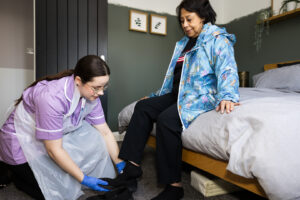
The heart of our service is our people. We believe that to provide exceptional care, we must employ exceptional individuals. This is why our recruitment and induction processes are among the most rigorous in the industry, specifically designed to meet CQC Regulation 19: Fit and Proper Persons Employed, and to build a confident, compassionate team.
A rigorous recruitment process
To ensure the safety and wellbeing of clients, a rigorous recruitment process is followed for every Care Professional:
- Values-Based Interviews: We conduct face-to-face interviews to assess not just skills, but the candidate’s inherent kindness and suitability for working with vulnerable people.
- Verified References: Four verified references must be obtained, including at least one from the candidate’s current or most recent employer.
- DBS Checks: An Enhanced Disclosure and Barring Service (DBS) check is mandatory, and Care Professionals are not permitted to commence work prior to the receipt of a satisfactory DBS certificate.
- Right to Work and Identity: Original identification documents must be seen and copied to verify the candidate’s right to work in the UK and their identity.
- Employment History: A full chronological employment history must be provided, and any gaps in employment must be explored and documented.

Continuous professional development
Once successfully vetted, Care Professionals undergo a comprehensive training programme to ensure they are fully equipped to support clients safely:
- The Care Certificate: New Care Professionals complete a 12-week induction programme designed to achieve the Care Certificate (unless they can provide proof of prior achievement).
- E-Learning: A suite of mandatory online courses must be completed, covering critical topics such as Safeguarding, Infection Control, Medication, Dementia Awareness, Mental Capacity and DoLS, and the Oliver McGowan Training.
- Practical Training: In-person, practical training sessions are delivered covering Moving and Handling, Basic Life Support, Infection Control, and Medication.
- Shadowing: Care Professionals must undertake up to 15 hours of shadowing with an experienced Field Care Supervisor. This allows them to gain practical experience, understand good practice, and learn how to use the care software in the field.
- Competency Checks: Before working independently, Care Professionals must be formally assessed and signed off as competent in key areas, including medication administration and moving and handling.
- Specialist Training: If a Care Professional is required to support a client with complex needs (such as PEG feeding, stoma care, or end-of-life care), additional specialist training is provided by a healthcare professional.

Training and vetting do not stop after induction. Radfield Home Care supports continuous professional development through:
- Refresher Training: A rolling programme of annual and bi-annual refresher training ensures skills and knowledge remain up to date.
- Supervision and Spot Checks: Quality is monitored through bi-monthly spot checks, quarterly office-based supervisions, and annual appraisals.
You should never feel uncomfortable asking how staff are vetted and trained for your own piece of mind.

Why are care planning and risk assessments so vital?
At Radfield Home Care, care planning and risk assessments are fundamental to delivering safe, effective, and highly person-centred care.
Both processes work together to ensure that we support our clients to live as independently as possible, while carefully managing any potential hazards.
Here is an overview of how care planning and risk assessments are managed in order to be compliant with the CQC-regulated framework.
Person-centred care planning
The care planning process begins with a comprehensive and compassionate care consultation. This is an opportunity to put the client at the centre of the process, working in partnership with them and their family to understand their needs, preferences, and goals.
- Outcome-Focused Care: Care plans should focus on outcomes rather than just tasks. Every activity listed on the care plan must link back to a specific outcome the client wishes to achieve, whether that is rehabilitating after a stroke or maintaining comfort and dignity during palliative care.
- Detailed Activities: The care plan must provide Care Professionals with detailed, step-by-step guidance. It should specify what equipment is needed, what the Client can do for themselves (to promote independence), what the Care Professional needs to do, and exactly how to preserve the Client’s dignity.
- Personalised Language: If the Client has communicated how they want their care delivered, it is best practice to write the care plan in the first person (e.g., “I would like to be asked whether I want tea or coffee”). If they are unable to provide this information, it should be written in the third person.
- One Page Profiles: To further enhance person-centred care, a “One Page Profile” should be built up over time to capture highly personalised information about who the Client is as an individual.
CQC-regulated risk assessments and positive risk-taking
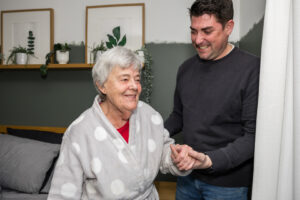
Radfield understands that living a full and independent life often involves taking risks. The goal of a risk assessment is not to be risk-averse, but to support positive risk-taking by identifying hazards and putting safe management plans in place.
- Mandatory Assessments: Before care commences, a suitably trained member of the office team must complete a set of risk assessments, including a full Environment risk assessment, a Fire Risk Assessment, and a Lone Working Risk Assessment for the client’s home.
- Specific Needs Assessments: Depending on the information gathered during the care consultation, additional specific risk assessments must be completed though our Care Software Management system. This might include assessments for Moving and Handling, Medication, Nutrition, Pressure Care, COSHH or Bed Rails.
- Risk Management Plans: Any significant risks must be clearly documented on the care plan, alongside a step-by-step action plan to instruct Care Professionals on how to minimise those risks during their visits. If a risk is identified that is too great, care cannot safely commence until measures have been taken to minimise it.

Ongoing home care compliance monitoring and reviews
Because a client’s needs and environment can change, care plans and risk assessments must be continuously monitored and reviewed.
- The first six weeks of a care package are particularly fluid, and a formal 6-week review must be conducted to ensure the care plan is successfully meeting the client’s outcomes.
- Following the initial period, all clients receive regular touchpoints throughout the year including a 3-monthly care plan review.
- Risk assessments must be reviewed and updated in line with reviews, or more frequently if the client’s circumstances change, a new risk arises, or following an incident such as a fall.
All care plans, risk assessments, and reviews are securely managed and recorded using our Care Software Management system, ensuring that Care Professionals always have real-time access to the most accurate information.
Care plans are not a one time document and risk assessments are not about restricting independence but about enabling safe independence.

How do we ensure safe medication management?
Supporting clients with their medication is a vital part of delivering safe, effective, and person-centred care. All medication support is guided by strict policies to ensure compliance with Care Quality Commission (CQC) framework, regulation, and NICE guidelines.
Care Professionals are trained to always follow the “6 R’s” of medication administration: the Right person, Right medicine, Right route, Right dose, Right time, and the Right to refuse.
The exact level of medication support a client requires is determined during their initial care consultation, regularly reviewed, and clearly detailed in their care plan and Medication Administration Record (MAR) on our Care Software Management system.
The support provided falls into the following categories:
- Self-Administration: Radfield Home Care maintains that self-administration is the preferred option whenever safe and possible, as it promotes the client’s independence, privacy, and autonomy.
- Level 1 (Prompting and General Assistance): This involves supporting a client who is largely independent. Care Professionals may request or collect prescriptions, prompt the client to take their medicine, or provide physical assistance, such as opening bottles or popping tablets from blister packs, provided the client can instruct them on which medicines to select.
- Level 2 (Administering Medication): This level is for clients who cannot manage their medication independently. Care Professionals will check the MAR, prepare the medication, and administer it. This includes administering tablets from original packaging or blister packs, as well as applying creams, patches, and eye, ear, or nose drops.
- Level 3 (Specialised Techniques): In exceptional circumstances, Care Professionals may administer medication via specialist routes, such as through a PEG tube, giving oxygen, or administering insulin injections. This is strictly only permitted if the Care Professional has been properly trained and signed off as competent by a specialist healthcare professional (such as a registered nurse delegating the task).

Consent and mental capacity
Care Professionals must obtain the client’s consent each time they assist with medication. A client always has the right to refuse their medication.
If a client lacks the mental capacity to consent, medication can only be administered if there is a legal framework in place, such as a Health and Welfare Lasting Power of Attorney or a formal “best interests” decision made under the Mental Capacity Act 2005.
This includes situations where medication must be given covertly (hidden in food or drink), which requires rigorous multi-disciplinary agreement, documentation, and regular reviews.
Special types of medication
- PRN (When Required): For medications taken only when needed, a clear PRN protocol must be in place on our Care Software Management system . This outlines what the medication is for, symptoms to look out for, the minimum interval between doses, and the maximum dose in 24 hours.
- Controlled Drugs: Care Professionals can administer controlled drugs (such as morphine) but must be exceptionally vigilant, recording exact administration times to ensure subsequent doses are not given too early.
- Over the Counter (OTC): Care Professionals cannot purchase or administer OTC medications (like painkillers or cough medicine) for a Client without the office first obtaining permission from the Client’s prescriber to ensure there are no adverse drug interactions.

Record keeping and errors
Every instance of medication support must be recorded accurately on the electronic MAR in the our Care Software Management system using the correct codes (e.g., Administered, Prompted, Refused).
Radfield Home Care maintains a supportive, no-blame culture regarding medication errors; if a mistake occurs or a dose is spoiled, the Care Professional must contact the office immediately and complete a Medication Incident Form so that advice can be sought and lessons can be learned to protect the client’s wellbeing.
Medication management is one of the most highly regulated aspects of care and transparency here is essential.

Keeping families connected through clear communication
At Radfield Home Care, relatives, friends, and carers are viewed as vital partners in the care and support network. Effective and compassionate communication with a client’s family is essential to providing high-quality, person-centred care, while always ensuring the client’s own wishes and rights remain paramount.
Consent and confidentiality
- Permission to Share: Information about a client must only be shared with a relative or friend if the client has given their express permission. During the initial care consultation, the assessor will establish and document exactly who Radfield Home Care is authorised to communicate with regarding the client’s care.
- Telephone Enquiries: If a family member calls the office requesting information and the team is not familiar with them, the care plan must be checked first to ensure they are an authorised contact. If they are not listed, staff must politely explain that information cannot be shared, take their details, and contact the client to seek permission before calling back.
Keeping families connected and informed
- The Family/Friend App: To provide transparency and peace of mind, family members can be granted access to view care records via our Care Software Management systems mobile app. The client must complete and sign an “Access To Client Records Request Form” to consent to this.
- Care Planning: Families can be highly valuable in helping to build a comprehensive picture of the client. For example, relatives can help complete the ‘One Page Profile’ over time to share the client’s personal history, preferences, and lifestyle, enabling Care Professionals to deliver truly tailored companionship and care.
- Changes and Emergencies: If the client’s health deteriorates or if an emergency occurs (such as a fall or a missed response at the door), the designated next of kin or emergency contact must be notified promptly, provided this aligns with the agreed communication plan.
Navigating family dynamics
- Managing Expectations: Arranging care for a loved one is often a highly stressful and emotional time for families. Communication should always be empathetic, clear, and transparent. It is important to carefully manage a family’s expectations regarding the level, type, and frequency of care that can realistically and legally be provided.
- The Client is Paramount: There may be occasions where relatives request changes to care (such as adding or cancelling visits) that conflict with what the client wants. As long as the client has the mental capacity to make their own decisions, the client’s wishes must always be upheld. If a family is not supportive of decisions that keep the client safe, external assistance from advocacy services or safeguarding teams may need to be sought.
- Documentation: In any situation involving differing family opinions or complex dynamics, every conversation, decision, and care plan change must be meticulously documented on our Care Software Management system, to maintain a clear factual record.
Strong communication builds trust and you should never feel “out of the loop.” At Radfield Home Care, we see families as partners in care

What should you ask a potential care provider?
The information you need to ask for depends on the type of provider you are engaging with.
If you’re unsure, here are practical questions you can ask:
About safety and regulation
- Who regulates your service?
- When was your last inspection?
- Can I see your latest report?
About staff
- How are Care Professionals vetted?
- What training do they receive?
- How are they supervised?
About care planning
- How is the care plan created?
- How often is it reviewed?
- How do you manage changing needs?
About medication
- Are staff trained to administer medication?
- How are errors handled?
About communication
- Who do I contact with concerns?
- How often will we receive updates?
A good provider will answer confidently and clearly and without defensiveness.

You are not alone in this journey
Choosing care is not about finding perfection. It’s about finding:
- A regulated provider
- A transparent process
- Trained professionals
- Clear communication
- A culture of dignity and safety
If you are asking thoughtful questions and reviewing providers carefully, you are acting responsibly and compassionately. Remember, care decisions are not permanent. Services can be reviewed and adjusted. The right provider will work with you, not pressure you.
You’re not alone in this decision. The right care should feel supportive, structured, and safe for both your loved one and for you.