
National Office
Please enter the office location/term above to receive results for your closest office as well as information matches
National Office
Please enter the office location/term above to receive results for your closest office as well as information matches
For many families, the moment care enters the conversation, it can feel like a turning point. Not just practically, but emotionally. It can feel as though once support is needed, life must change dramatically; that relationships will shift, routines will be disrupted, and togetherness may be lost.
At Radfield Home Care, we speak to families every day who feel conflicted in this way. Adult children supporting a parent. Couples quietly noticing that things are becoming harder. Spouses who love each other deeply but are unsure how to plan for the future without changing what matters most.
This guide is here to explore those feelings, to gently unpack what care can look like, and to show that support does not have to mean separation.

There are many alternatives to care homes which provide your loved one with the support they need, while avoiding separation. Staying at home with support is not just possible, it is often the best way to protect the relationships that matter most.
Radfield Home Care has been providing quality private home care for over 40 years. We are a champion for care that people want as well as need. We exist to help our nation age well by keeping people connected to the things that matter most to them – including the people they love.
Care decisions are rarely just about care. They are about identity, roles, and relationships. For many families, particularly those who are close-knit or supporting couples, the idea of introducing care can feel symbolic, as though it marks the end of a chapter.
Independence may feel threatened. Family dynamics may feel at risk. Long-held routines, roles and shared moments can suddenly feel fragile.
Adult children often describe feeling torn. On one hand, they want to protect a parent’s dignity and wishes. On the other, they may be noticing changes that cannot be ignored – missed meals, increased falls risk, memory lapses, or growing exhaustion in a caregiving spouse.
Knowing something needs to change does not automatically make it easier to accept what that change might look like. 
For couples, the emotional weight can be even heavier. Many have spent decades building a shared life, home, and rhythm together. The thought that care might separate them – physically or emotionally – can feel unbearable.
This is why so many families delay care conversations. Not because they are in denial, but because they care deeply. Hesitation is not avoidance; it is often love trying to protect what matters.
Hence why it is important to understand that moving away isn’t the only answer; several alternatives to residential care exist to bridge this gap. By exploring private home care services that prioritise the household’s existing rhythm, families can find a middle ground.
Recognising these flexible home care support options allows you to address safety and health concerns without sacrificing the comfort of home or the closeness of your relationships
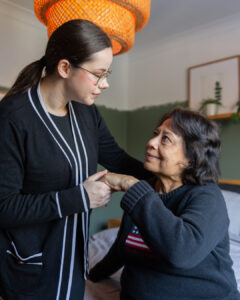
One of the most common concerns we hear is not about the quality of care itself, but about what care represents.
Families often worry that:
One of the main reasons a loved one refuses care is guilt. Those caring for a parent may worry that seeking support means they are “giving up” or failing in their responsibilities. Spouses may feel they should be able to manage alone, even when they are exhausted. Couples may fear that accepting help will change how they see each other.

These fears are deeply human. They are rooted in love, loyalty and long-standing bonds. And they deserve to be acknowledged – not dismissed or rushed past. What is important to understand is that these fears are often based on a narrow idea of what care looks like.
When care is seen only as a last resort, or as something that removes people from their homes or families, it naturally feels threatening.
But care does not have to look like that. There are many alternatives to residential care which allow your loved one to stay at home, surrounded by family, and in an environment that feels familiar to them.
One of the biggest misconceptions around care is that it automatically creates distance – between couples, between parents and children, and between people and the lives they know. It is another common reason why a loved one refuses care.
In reality, the right care can do the opposite.
Care, when introduced thoughtfully, can:
We often say that good care does not replace relationships – it protects them.

When practical demands are shared with a trusted Care Professional, families often find they have more emotional space. Conversations become less about tasks and worries, and more about connection. Time together feels lighter, not heavier.
For couples, this can mean remaining together at home for longer, supported in a way that respects their shared life. For adult children, care at home for couples & adult parents can mean stepping out of constant oversight and back into the role of daughter or son.
Care should not take over family life. It should fit around it.
Every family is different, and there is no single “right” type of care. What matters is finding support that aligns with your values, relationships and stage of life.
At Radfield Home Care, we offer both visiting care and live in care at home, and we see them not as fixed pathways, but as flexible home care options that can adapt as needs change.
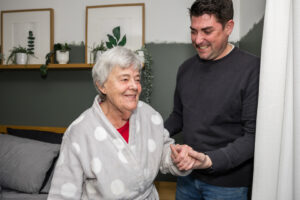
Visiting care provides professional support at set times during the day or week, allowing people to remain at home and maintain their usual routines.
For many families and couples, visiting care can be an ideal first step. It offers:
Visiting care can also help rebalance relationships. A spouse may no longer need to manage every task alone. Adult children can step back from constant monitoring while remaining closely involved. Support is there, but life still feels like home.
This type of home care works particularly well when needs are emerging or variable, and when families want support that feels unobtrusive.

Live in care at home involves a dedicated Care Professional living in the home to provide round-the-clock support. For families concerned about separation, care at home for couples can be a powerful alternative to residential care.
Live in care allows people to:
Importantly, live in care does not mean loss of independence. It means support that is shaped around the person and the household. For couples, this can preserve a sense of normality and togetherness, even as needs increase.
Many families choose live in care as an alternative to a care home precisely because it protects relationships – allowing people to continue living side by side, supported rather than divided.

One of the most reassuring things families often hear is that care does not need to be an all-or-nothing decision.
You do not need to have everything figured out.
You do not need to commit long term.
You do not need to rush.
Exploring home care alternatives to residential care is not the same as locking into a plan. Conversations can start small. Support can be introduced gradually. Care can change as needs change.
Whether you are considering visiting care, live in care, or simply trying to understand what might help, taking time to talk things through can make the process feel far less daunting.
At Radfield Home Care, we believe care works best when it is done with families, not to them. That means listening first, understanding relationships, and respecting what matters most to you. So if you are asking “what if we’re not ready to be separated by care decisions?”, you do not have to be. With home care, you can remain in the place you cherish most – your home – while receiving the care you need.

Care decisions are some of the most personal decisions a family will ever make. They touch on love, history, identity and hope for the future.
If you are feeling conflicted, unsure, or protective of the relationships in your life, those feelings matter. Wanting to stay connected is not a barrier to care; it is often the very reason support is needed.
The right support helps people remain themselves, remain together and remain connected to the lives they value. That is what quality home care should look like.
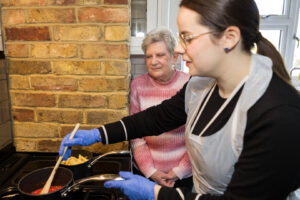
Radfield Home Care has spent over four decades supporting families through these moments. We are proud to provide private home care services which champion dignity, choice and connection – care that people want as well as need.
If you would like to explore your options, talk things through, or simply understand what support could look like for your family, we are here to listen. Sometimes, the first step is not a decision at all – just a conversation.