
National Office
Please enter the office location/term above to receive results for your closest office as well as information matches
National Office
Please enter the office location/term above to receive results for your closest office as well as information matches
If you are feeling overwhelmed while caring for a family member, we want to start by normalising that exhaustion. It is not a sign of failure; it is a sign that you are human. Supporting a loved one as they age is a marathon, not a sprint, and nobody is expected to run it alone.
We believe in reframing care as a shared support system. By introducing Care Professionals, you aren’t stepping away; you are building a team that ensures your loved one can age well while you reclaim your role as a daughter, son, spouse, or friend.
At Radfield Home Care, we often speak with families who feel they are reaching a breaking point – not because they don’t care, but because they care so much they have forgotten to look after themselves. In this guide we’ll explore common signs of burnout, how to avoid it, and what care options you have available.
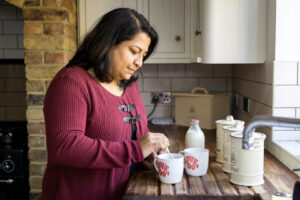
It is common for individuals looking after their family member to gradually take on more and more responsibilities until the weight becomes impossible to carry.
Because the change often happens slowly, you might not realise how much your own life has shrunk to accommodate the needs of your loved one. Identifying the signs of caregiver burnout early is essential for your health and the safety of the person you are supporting.
You may notice that you are constantly “on edge,” waiting for the next phone call or the next minor crisis. Perhaps your own hobbies, social life, and health appointments have fallen by the wayside.
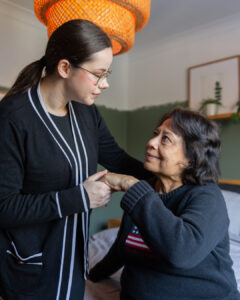
When you find that you are frequently losing your patience, feeling a persistent sense of dread, or struggling to sleep because your mind is racing with “what-ifs,” these are clear signs of burnout, meaning that the current situation is unsustainable.
We often see families who wait until a medical emergency occurs before they look for private home care. However, by recognising these signs of caregiver burnout early, we can help you implement a plan that prevents a crisis, rather than just reacting to one.
Caring alone is a heavy burden; sharing that load is the first step toward a more balanced life for everyone involved.

The toll of providing constant support is both physical and emotional. Physically, the lack of sleep and the constant activity can lead to a weakened immune system and chronic fatigue. Emotionally, the impact can be even more complex.
Many family members experience “anticipatory grief” or a sense of loss for the relationship they used to have, which is now dominated by schedules, medication, and domestic chores.
When you are burnt out, you cannot provide the high-quality, empathetic support your loved one deserves. It is the classic analogy of the oxygen mask on an aeroplane: you must secure your own before you can help anyone else.
If your physical health is declining or your mental wellbeing is suffering, it directly affects the quality of life for the person you care for.
At Radfield Home Care, we are a champion for care that people want as well as need, and that extends to the family.
We want to help you move away from the “panic” of daily survival and toward a structured plan where your emotional wellbeing is prioritised alongside your loved one’s requirements.
Using Care Professionals allows you to preserve your physical energy and emotional reserve for the moments that truly matter, the conversations, the laughter, and the shared memories.

One of the most effective ways to prevent total exhaustion and caregiver burnout is through respite care. This is a service designed specifically to give you the break you need and deserve.
Whether it is for a few hours a week, a weekend away, or a longer holiday, respite care ensures that your loved one is supported by expert Care Professionals while you take time to recharge.
Many families feel a sense of hesitation when considering respite care, fearing that their loved one will feel abandoned. On the contrary, we find that introducing a new, friendly face can be a breath of fresh air. It provides your loved one with new social stimulation and a change of pace, which is vital for helping our nation age well.
Taking a break is not a luxury; it is a clinical necessity for anyone in a support role. When you return from a period of respite, you return with more patience, more energy, and a clearer perspective.
Respite care isn’t about stepping out of the picture; it’s about ensuring you have the strength to stay in it for the long term.

If the idea of “full care” feels too daunting, starting with companionship support is an excellent way to introduce shared support gradually.
Many people don’t initially need help with washing or dressing; what they really need, and what their family needs them to have, is social connection and a watchful eye.
Companionship support involves a Care Professional visiting to share a cup of tea, go for a walk, or help with a hobby.
For the family carer, this provides a guaranteed window of time where you can leave the house, go to the gym, or simply sit in silence, knowing your loved one is safe and happy.

Because companionship support is non-clinical and focused on friendship, it is often very well-received by those who might be resistant to more practical help.
It normalises the presence of a Care Professional in the home and builds a bridge of trust.
This regular relief is a vital component of care planning without panic, allowing you to build a support network before the pressure becomes too high.

As needs progress, visiting care becomes a powerful tool for maintaining a sense of order and safety in the home. This type of support is entirely flexible and can be tailored to the specific times of day that you find most challenging.
For many family carers, the “sundowning” period in the evening or the rush of the morning routine are the points where exhaustion peaks.
Visiting care can assist with:
By bringing in Care Professionals for these specific tasks, you remove the “to-do list” from your relationship with your loved one. Instead of spending your visit cleaning the kitchen or managing pill boxes, you can simply be together.
This practical support is a cornerstone of private home care, ensuring that the home remains a place of comfort rather than a place of work.

For families where the support needs have become 24-hour, or where the anxiety of a loved one being alone at night is too much to bear, live in care offers a comprehensive solution. This is often the ultimate way to reduce pressure on a family carer who is struggling to cope.
With live in care, a dedicated Care Professional resides in the home, providing consistent, one-to-one support. This model is incredibly effective for those living with conditions like dementia, where familiarity and routine are paramount.
For the family, the relief of knowing someone is there around the clock is immeasurable.
It eliminates the “panic” of middle-of-the-night phone calls and the constant worry about falls or emergencies.
Choosing live in care through a premium provider ensures continuity. Your loved one remains in the environment they love, surrounded by their own belongings and memories, while receiving professional support that adapts to their daily rhythm.
It is a transformative way to help people age well, providing the highest level of safety while preserving the highest level of independence.

The biggest obstacle to care planning is often guilt. We hear from many people caring for their loved one who feel they “should” be able to do it all themselves.
We want to gently challenge that notion. Seeking help is not a sign that you have failed your loved one; it is a sign that you are making a professional, loving decision to ensure they have the best possible life.
When you wait until you are at the point of collapse, your choices become limited and rushed. By exploring private home & respite care options early, you can make decisions calmly and involve your loved one in the process.
This leads to a much more successful transition and a stronger relationship between the family and the Care Professionals, as well as helps with avoiding burnout as a family caregiver.

Remember, Radfield Home Care exists to help our nation age well. We believe that ageing well involves the whole family. It means a daughter being able to visit her mother for a chat rather than a chore.
It means a husband being able to sleep soundly knowing his wife is cared for.
Letting go of the “sole carer” identity and embracing a team approach helps with avoiding burnout while caring for a loved one, while also ensuring that both them and you have the exact support you need to thrive.
If you are feeling overwhelmed while caring for a family member, and that the weight of responsibility starting to pull you down, please know that you don’t have to carry it alone. Our team is here to listen, to understand your unique situation, and to help you build a care plan that restores your energy and protects your loved one’s independence.
Start planning today. Let us help you move from panic to peace of mind with a tailored support plan.
What does respite care involve for a family caregiver?
Is visiting care more effective than moving to a residential home?
How can companionship support help an overwhelmed family member?